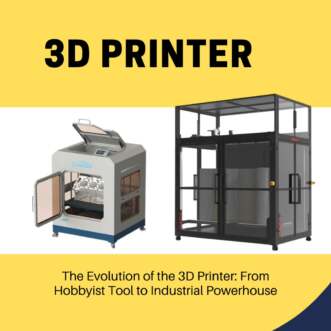
The Evolution of the 3D Printer: From Hobbyist Tool to Industrial Powerhouse
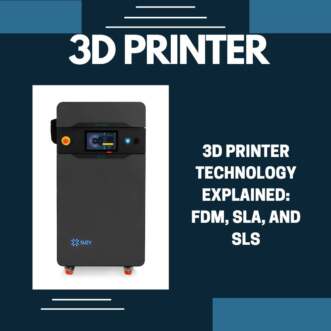
The 3D printer started as an experimental DIY technology but has now become an important part of global manufacturing. Today, many industries from aerospace to healthcare rely on advanced systems like the industrial 3D printer, large build volume 3D printer, and even robot 3D printers to meet their production goals.
At Evo3D, we are a trusted source to get state-of-the-art 3D printing technology. We help hobbyists, professionals, and manufacturers find the right 3D printers for their needs. This blog will take a deep dive into 3D printing and how this technology has transformed from a simple prototyping tool into one of the most significant innovations in the 21st-century.
Early Days of 3D Printers
3D printing was known as “rapid prototyping” in the 1980s and 1990s. It was predominately controlled by only research labs, university departments, and a few early adopters. The printers were slow, expensive, and could usually only print with basic thermoplastic materials. By the 2000s, we began to see desktop versions of the 3D printer and gained the interest of makers and hobbyists.
Most of the early machines were open-source, enabling users to tweak and upgrade machines. They were not the best machines, but they inspired people to design and build small 3D objects in their homes. The advent of the affordable 3D printer offered a compelling and innovative way to teach problem-solving, design, and engineering skills that were previously unattainable to schools and universities.
The Shift Toward Professional and Commercial Use
With time, as more people started adopting this technology, its demand for higher performance also grew. Designers, architects, and engineers started to use 3D printers for prototyping. Businesses also got a huge competitive advantage as they could create functional parts in hours instead of weeks. The printers were becoming faster, accurate, and could print with a wide range of materials.
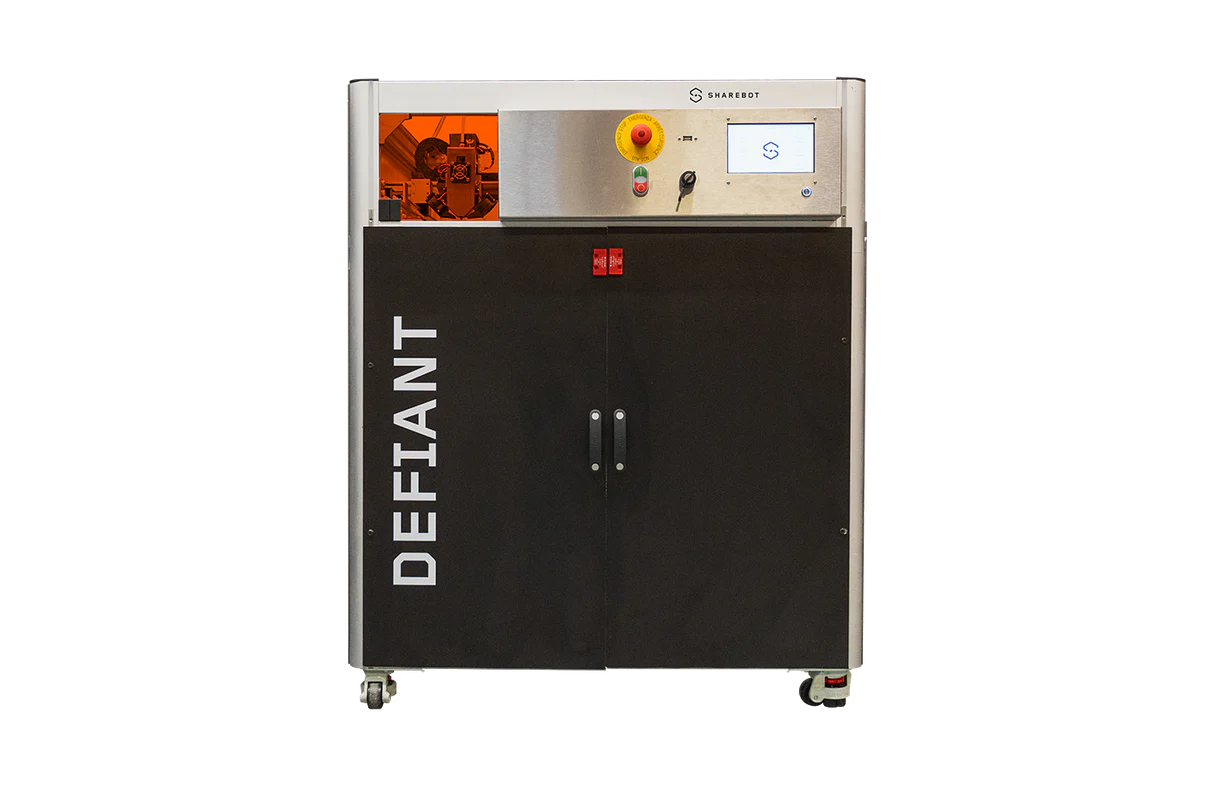
But the real breakthrough came when the industrial 3D printer came into the large-scale manufacturing scene. These industrial systems were designed for precision, durability, and continuous operation. They could work with advanced polymers, composites, and even metals. Hence, industries like aerospace, healthcare, and automotive started to use them.
Large Build Volume and Robot 3D Printers
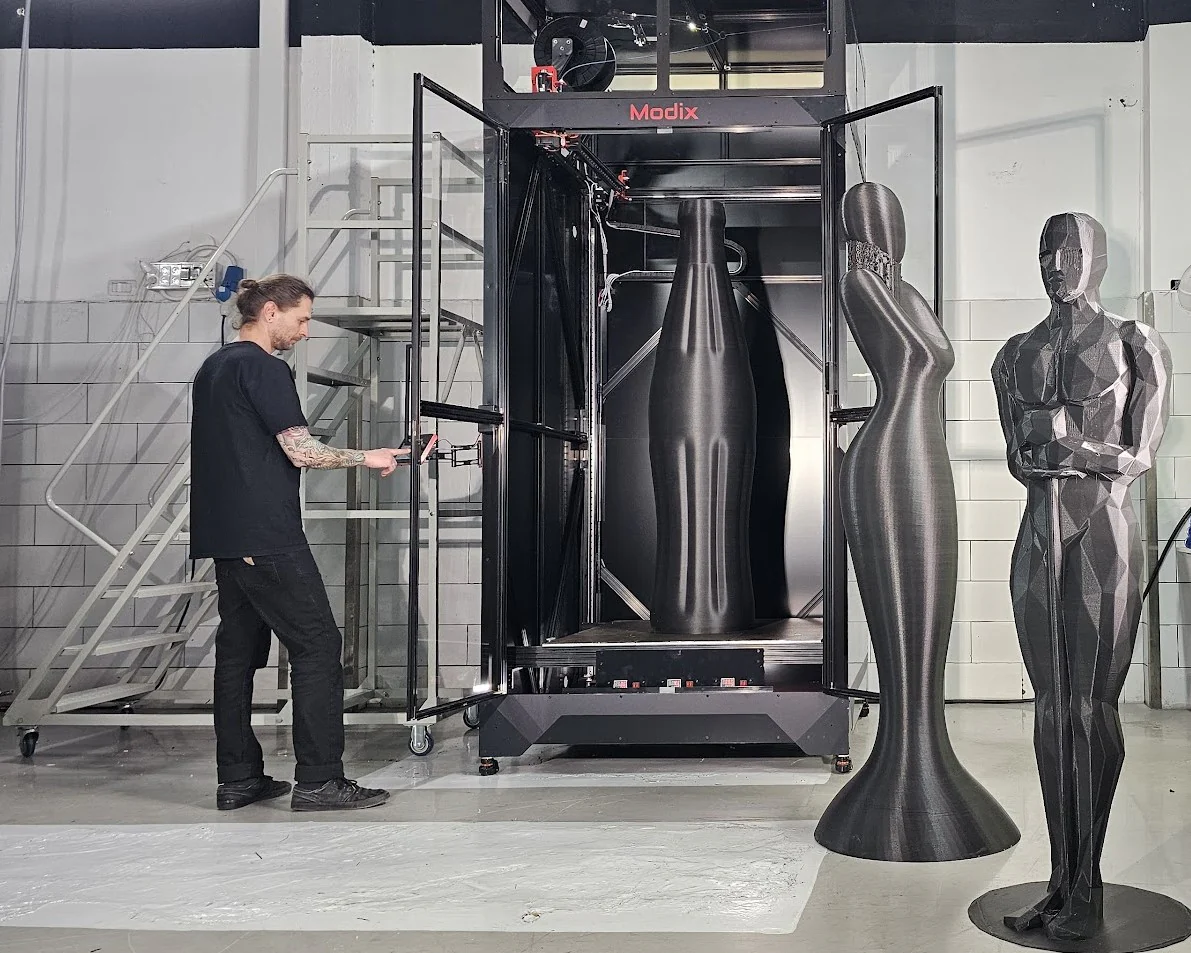
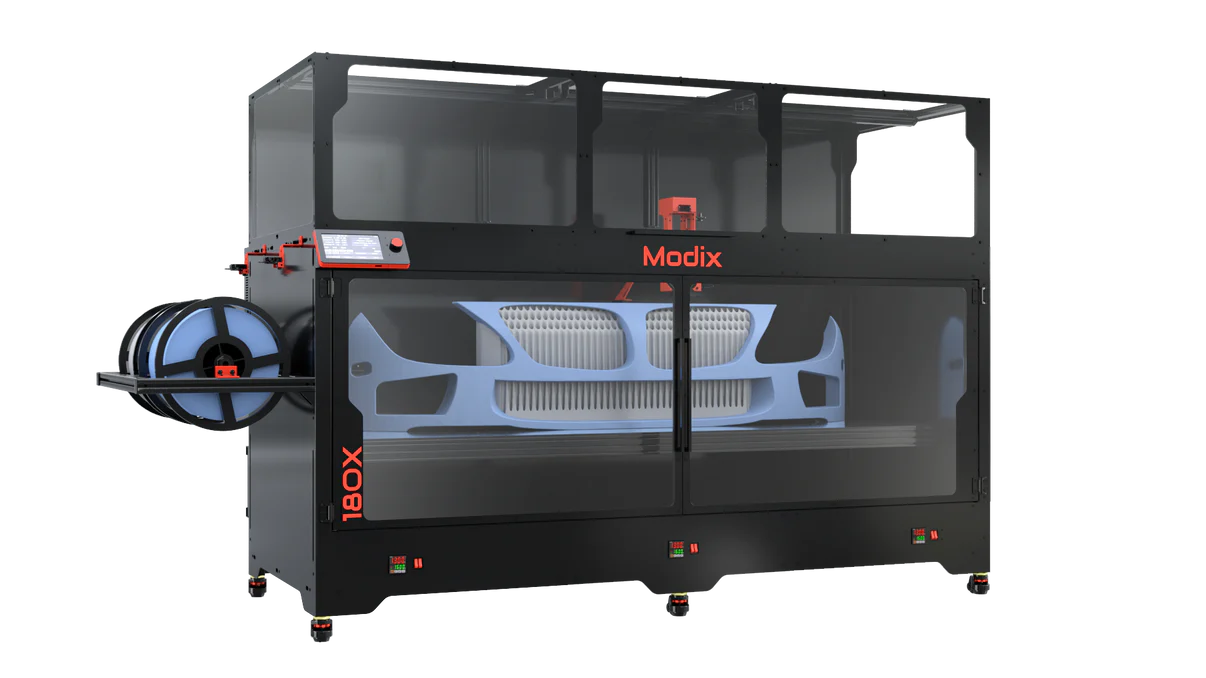
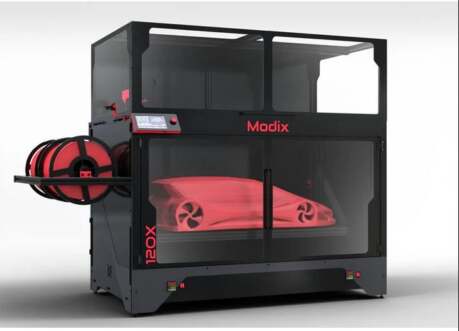
Another important milestone was the advent of large build volume 3D printers. Earlier 3D printers could only print smaller trinkets or models, but as time went on, it became apparent that industries required larger capabilities. With large-format printers, manufacturers could create full-sized prototypes, architectural models, and even furniture pieces, all in one go.
Because these objects did not have to be produced in multiple smaller prints, these machines offered improved structural strength, reduced assembly time, and cost savings. Large-format machines have now been widely adopted in industries such as construction, automotive, and product design.
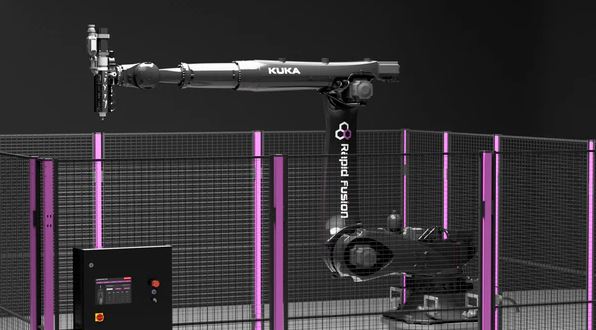
The latest evolution in the 3D printing journey is automation. A robot 3D printer has even more flexibility, speed, and scalability than a standard 3D printer. Robotic arms can easily print in multiple axes, create complex geometries, and work continuously with minimal human intervention. This kind of automation is especially important for industries that want to use additive manufacturing to create full production lines.
Get Quality 3D Printers at Evo3D
As the 3D printer evolved from a hobbyist tool to an industrial powerhouse, now all kinds of businesses can access additive manufacturing. Hobbyists can still get affordable desktop printers, and SMEs (small and medium enterprises) can get professional systems for design and prototyping. Large corporations, on the other hand, rely on industrial 3D printers, large build volume 3D printers, and robot 3D printers for production and to stay ahead of the competition.
If you’re also thinking of adopting the 3D printing technology, you should choose one according to your needs. Not every project needs a metal printer worth six figures. Sometimes, even a smaller professional model can deliver excellent results, and the key is to select the right model.
At Evo3D, we offer a wide variety of quality 3D printers. So whether you’re a hobbyist starting out, a professional looking for more precision, or a manufacturer that wants advanced solutions, we can help you.
Ready to take the next step in your 3D printing journey? Contact us today.